
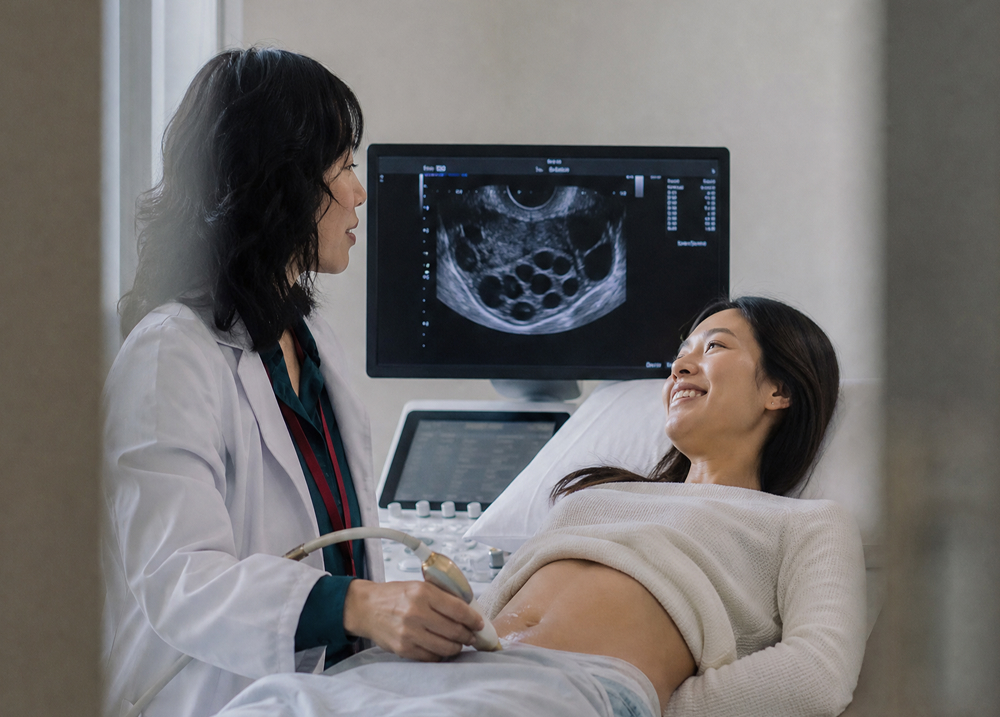

For married couples who are planning to have children but may not be ready at the moment because of work responsibilities or because they want to establish stability in all aspects of life before having a child, they can consult a doctor about preserving fertility through egg freezing. As women’s eggs tend to deteriorate in quality as they get older, freezing eggs in advance can help reduce the risk of abnormalities in a future baby and may increase the chance of having a healthy and fully developed baby.
What Is Egg Freezing?
Egg Freezing is a medical process that helps preserve the quality and quantity of a woman’s eggs by retrieving eggs from the ovaries and freezing them for future use. When the woman is ready to become pregnant, the frozen eggs can be used for fertilization. The resulting embryos are then cultured in a laboratory before being transferred back into the uterine cavity when she is ready to become pregnant.
Before starting the egg retrieval process, the doctor will perform blood tests and various hormone tests to assess overall health, including checking the levels of hormones related to ovarian function. The results will then be used to appropriately plan the treatment.
After the initial health assessment, the doctor will begin the ovarian stimulation process by using daily subcutaneous injections for approximately 8–14 days. The medication stimulates hormones to help the ovaries produce multiple eggs in one cycle instead of one egg as occurs naturally.
After ovarian stimulation, the doctor will closely monitor the growth of the eggs through abdominal ultrasound and periodic blood tests to assess the size and number of eggs that are ready for retrieval.
When the eggs have fully developed, the doctor will administer a trigger injection to cause the eggs to mature and be released at the same time, which helps make the egg retrieval process more effective.
Approximately 34–36 hours after the trigger injection, the doctor will perform the egg retrieval. Patients should follow the instructions below:
The egg retrieval procedure includes the following steps:
After the eggs have been retrieved, a specialist will evaluate the quality of the eggs and prepare them for freezing using a technique called Vitrification. This is a rapid freezing technique at a temperature of -196°C. The frozen eggs can be stored for many years.
Age is one of the important factors affecting both the quantity and quality of eggs. Freezing eggs while good-quality eggs are still available can therefore help preserve the “opportunity to have children” in advance. However, this does not mean that egg freezing guarantees pregnancy in the future, as success also depends on the number of eggs retrieved, egg quality, and other factors at the time the eggs are used.
When it is time to use the frozen eggs, the eggs will be thawed and fertilized with sperm. The doctor may choose to use the ICSI technique to help inject sperm directly into the egg. The resulting embryos will then be cultured, and embryo transfer back into the uterine cavity will be considered as appropriate. Therefore, egg freezing is a process of preserving eggs for future use, not an immediate pregnancy.
Assessing whether egg freezing is appropriate should not be based on age alone, but should also take into consideration the number of eggs that can be retrieved and factors related to ovarian health. Having more frozen eggs does not mean that pregnancy will be guaranteed, but it can increase the chance of having enough eggs available for future use.
The Vitrification technique helps reduce cell damage during the freezing and thawing processes, allowing eggs to be preserved for a long period of time. However, the quality of the eggs at the time of freezing remains an important factor because freezing helps preserve the condition of the eggs at the time they are stored; it does not improve egg quality as time passes.
As women get older, or when they reach the age of 35 and above, the quality and quantity of their eggs naturally decrease, which can make it more difficult to have children. In addition, poor-quality eggs may increase the risk of abnormalities in the baby, as well as complications during pregnancy.
For women who are planning to have children in the future, egg freezing is recommended between the ages of 25–35, as this is the age range when eggs are still healthy and in good condition, helping to reduce the risk of abnormalities in the baby. In addition to increasing age, egg freezing is also suitable for women who have the following circumstances:
For women who are planning to freeze their eggs, the following preparations are recommended:
Advantages
Limitations
The chance of pregnancy from frozen eggs varies depending on the quality and number of eggs, as well as the age of the woman who freezes her eggs. It can be divided as follows:
Egg freezing is a process of retrieving eggs and freezing them at an appropriate temperature of -196°C. The egg cells will not deteriorate, so they can be stored for as long as needed. However, in general, eggs are often stored for approximately 10 years so that the eggs remain in good quality and are most suitable for use in fertilization.
From the egg retrieval process described above, many people may feel concerned about whether the procedure will be painful. There is no need to worry because the patient will be given general anesthesia before the doctor performs the egg retrieval, so you will not feel any pain during the procedure. However, after the egg retrieval process, you may experience a dull ache in the lower abdomen or slight abdominal tightness, which can be treated with medication as recommended by the doctor.
For those who are planning to have children in the future and are interested in freezing their eggs, it is recommended to freeze eggs between the ages of 25–35 years, which is the reproductive age when the body can produce a larger number of eggs and the eggs are in their most complete condition. After this age range, egg quality begins to deteriorate and the number of eggs decreases, resulting in a decrease in the pregnancy success rate.
Egg freezing helps preserve good-quality eggs for future use in IVF and ICSI procedures, which can increase the opportunity for pregnancy.
For married couples who are interested in an egg freezing program but do not know which clinic to choose, VFC Center, Fertility Center offers an egg cell freezing package starting from tens of thousands of baht, to help prepare for having children at the most appropriate time.
If you are interested, you can make an appointment for a consultation with a doctor or ask for more information about the program and package you are interested in. Contact us at 082-903-2035.