
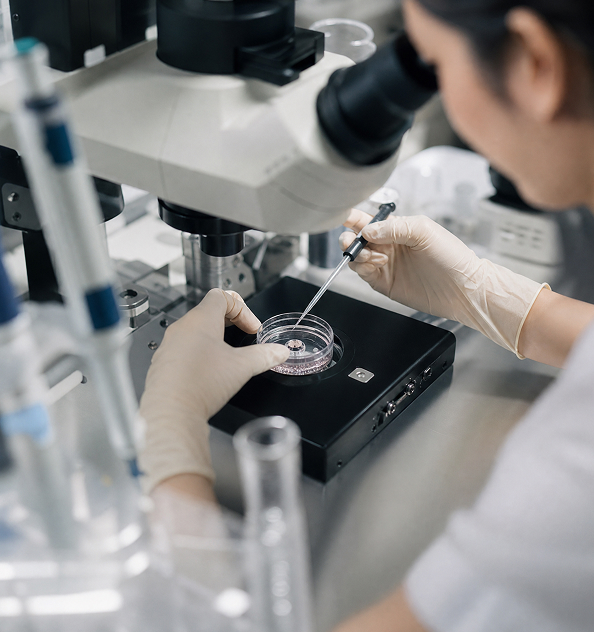
A smooth pregnancy and the birth of a healthy baby depend on the physical readiness of both the man and the woman. Therefore, even though men do not carry or give birth to the baby, they should also prepare themselves before planning to have children. This can help reduce the risk of problems associated with abnormal sperm, which may lead to other complications for both the mother and baby during pregnancy. Furthermore, abnormal sperm can also be an important cause of male infertility.
The male partner provides a semen sample at the clinic. It is recommended to abstain from ejaculation for 2–7 days before the test to obtain a suitable sample.
The semen sample is collected in a sterile container provided by the clinic in a private and designated room.
The sample is sent to the laboratory for analysis to detect damage to the sperm’s genetic material.
The test results indicate the level of DNA damage in the sperm, known as the DNA Fragmentation Index (DFI). A high DFI may be associated with embryo quality, implantation potential, and the risk of miscarriage.
The doctor will evaluate the results together with the patient’s medical history and recommend an appropriate approach, such as lifestyle modifications, antioxidant support, or selecting suitable assisted reproductive technologies.
Although Semen Analysis can be used to assess sperm count, motility, and morphology, the quality of the genetic material inside sperm is another factor that cannot be evaluated based solely on their external appearance. Sperm DNA Fragmentation therefore provides another level of information that helps assess sperm quality at the genetic level and may be important for certain men who continue to experience fertility problems even when their basic test results appear normal.
The integrity of sperm DNA is involved in the processes of fertilization and embryo development. A high level of DNA damage may be another factor to consider when couples experience difficulties achieving pregnancy or have a history of recurrent miscarriage. Evaluating sperm DNA provides doctors with a more detailed understanding of male fertility factors.
Oxidative stress is one of the factors associated with damage to genetic material in sperm. When the body has an excessive imbalance of free radicals, it may affect sperm cells and the DNA within them. Lifestyle factors such as smoking, alcohol consumption, pollution, stress, and exposure to heat are therefore important considerations for men when planning to have children.
Male age is one of the factors that can be considered when evaluating sperm quality. As men age, changes in sperm quality may occur, including a potential increase in DNA damage in some individuals. Therefore, sperm health assessment should consider both basic sperm quality and genetic factors.
Finding sperm DNA damage provides information that can be used as part of further care and treatment planning. Doctors may consider lifestyle and health-related factors, such as smoking, alcohol consumption, stress, sleep, conditions associated with testicular temperature, and other health factors before determining an approach that is appropriate for each individual.
DNA Fragmentation refers to the breakage of DNA in sperm. It is a condition in which the genetic material inside the sperm head becomes damaged, resulting in abnormal sperm. Although the damage may not be visible from the sperm’s external appearance, the DNA inside may still be damaged, requiring laboratory testing for diagnosis. It is considered one of the factors that can directly affect fertilization, the chances of achieving pregnancy, and embryo development. It can occur for several reasons, including:
Sperm DNA Fragmentation testing measures damage or breaks in the DNA within sperm. It can therefore provide a more detailed assessment of potential causes of male infertility than semen analysis alone.
The Sperm Chromatin Dispersion Test (SCD) is a method used to assess the quality of sperm DNA and support the evaluation of male infertility, particularly in cases where the initial semen analysis appears normal but the couple continues to experience difficulties conceiving or has a history of recurrent miscarriage.
The SCD Test is based on the principle that sperm with intact DNA, after undergoing certain chemical processes, such as removing proteins from the sperm head and allowing the DNA to unwind, will form a characteristic “halo” around the sperm head. This represents the dispersion of intact DNA loops.
In contrast, sperm with fragmented or damaged DNA will not form this halo or will form only a very small halo. This allows sperm with intact DNA to be distinguished from sperm with damaged DNA through microscopic examination.
The test results are then calculated as an index representing the proportion of sperm with damaged genetic material, known as the Sperm DNA Fragmentation Index (DFI). A sperm DNA fragmentation level above 30% is considered high and may be associated with reduced chances of fertilization, poorer embryo quality, and lower pregnancy rates.
For men experiencing infertility, in addition to considering appropriate medical treatment, making certain lifestyle changes and following appropriate recommendations are important factors that may help support sperm quality and prepare the sperm for fertilization.
DNA Fragmentation is a condition in which the genetic material within sperm becomes damaged or fragmented. Although sperm may appear normal in terms of shape and motility, the DNA inside may still be abnormal, which may affect fertilization, embryo quality, and the chances of achieving pregnancy.
Factors associated with sperm DNA damage include oxidative stress, increasing age, varicocele, smoking, alcohol consumption, stress, exposure to pollution or toxic substances, infections, and prolonged exposure to heat.
Testing may be considered for men experiencing infertility, particularly when routine semen analysis does not show any obvious abnormalities but pregnancy has still not been achieved. It may also be considered for couples with a history of recurrent miscarriage or certain difficulties during infertility treatment.
Sperm DNA damage can be assessed using various methods, such as the Sperm Chromatin Dispersion Test (SCD), which evaluates the pattern of DNA dispersion or the “halo” around the sperm head. The results are then assessed as the Sperm DNA Fragmentation Index (DFI).
High levels of sperm DNA damage may be associated with the chances of fertilization, embryo quality, and pregnancy outcomes. However, the results should be interpreted together with other test results and factors affecting both the male and female partners.
It is recommended to adjust lifestyle factors that may affect sperm quality, such as getting adequate sleep, exercising appropriately, managing stress, avoiding smoking and alcohol, and consuming foods rich in antioxidants. You should also follow your doctor’s recommendations to develop an appropriate treatment plan.