


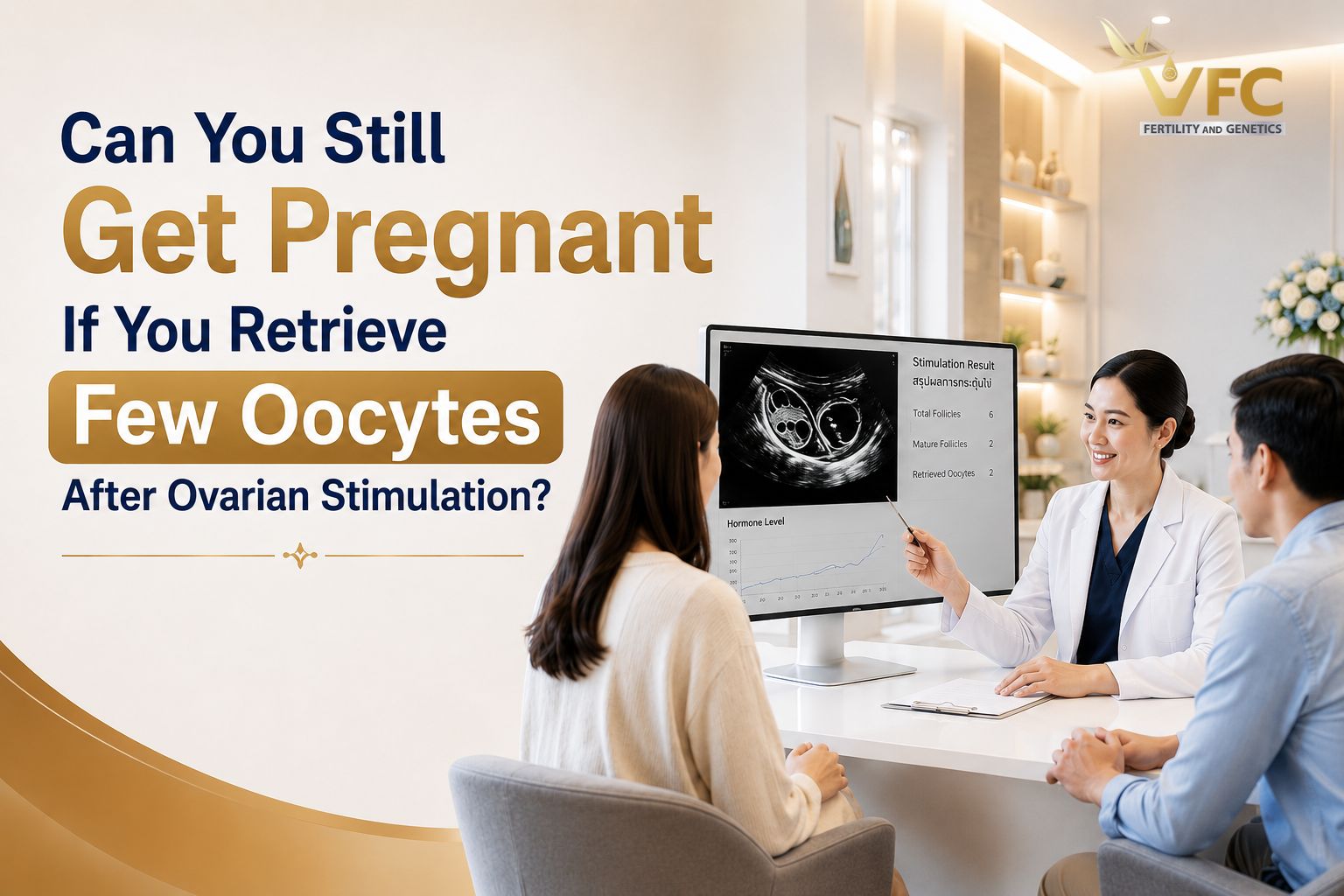
Can You Still Get Pregnant If You Retrieve Few Oocytes After Ovarian Stimulation?
For individuals undergoing ICSI treatment, one of the main expectations is to obtain an adequate number of Oocytes after ovarian stimulation. However, in some cases, the number of Oocytes retrieved may be lower than anticipated, causing concern about whether this could affect the chances of achieving pregnancy.
The number of Oocytes retrieved after ovarian stimulation is only one factor that influences the success of infertility treatment. Oocytes quality, embryo quality, the patient’s age, and overall reproductive health are equally important. Therefore, even if the number of Oocytes retrieved is lower than expected, a successful pregnancy is still possible.
Why Are Fewer Oocytes Retrieved After Ovarian Stimulation?
Each individual responds differently to ovarian stimulation medications. Factors such as age, ovarian reserve, hormone levels, and overall ovarian health can all affect the response. Although physicians can estimate the expected response based on ovarian reserve testing and other evaluations, some patients may respond differently than predicted, resulting in either fewer or more Oocytes retrieved than expected.
Common causes include:
- Increasing age is associated with reduced oocyte quantity and quality. However, poor Oocytes quality may also occur in younger women.
- Poor Ovarian Response (POR)
- Hormonal factors affecting ovarian function
- Genetic factors influencing responsiveness to ovarian stimulation hormones
- Reproductive health conditions or disorders
If You Have Few Oocytes After Ovarian Stimulation, What Are Your Chances of Pregnancy?
The answer is: there is still a chance.
The success of ICSI treatment does not depend solely on the number of Oocytes retrieved. The quality of both the Oocytes and sperm also plays a crucial role.
In some cases, even when only a small number of Oocytes are retrieved, high-quality Oocytes can still be successfully fertilized and develop into healthy embryos, ultimately leading to a successful pregnancy.
Therefore, retrieving a few Oocytes after ovarian stimulation does not necessarily mean that treatment will fail. Physicians evaluate multiple factors together to assess each patient’s chances of success.
How Can FSHR Testing Help Plan Ovarian Stimulation?
For some patients who retrieve a few Oocytes after ovarian stimulation, the cause may not be related solely to age or ovarian reserve. Genetic factors affecting ovarian responsiveness may also play a role.
Today, FSHR (Follicle Stimulating Hormone Receptor) testing can be used to help assess how the ovaries may respond to stimulation hormones. The results can support more personalized treatment planning.
Information obtained from FSHR testing may help physicians better predict an individual’s response to ovarian stimulation medications. This can benefit not only patients who are likely to respond poorly and retrieve fewer Oocytes than expected, but also those who may respond excessively and be at increased risk of Ovarian Hyperstimulation Syndrome (OHSS). Personalized treatment planning is therefore important for improving both treatment effectiveness and safety.
What Is FSHR?
FSHR (Follicle Stimulating Hormone Receptor) is a gene associated with how the ovaries respond to Follicle Stimulating Hormone (FSH), a key hormone used to stimulate Oocytes development during fertility treatment.
Genetic variations in the FSHR gene may affect how individuals respond to ovarian stimulation medications. Some patients may respond well, while others may require higher medication doses or retrieve fewer Oocytes than expected.
FSHR testing is therefore another useful tool that enables physicians to personalize ovarian stimulation protocols, improve treatment efficiency, and support more effective family planning.
FSHR Testing for Evaluating Ovarian Response
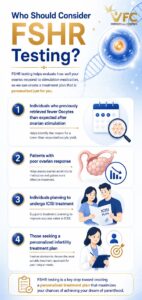
Who Should Consider FSHR Testing?
- Individuals who previously retrieved fewer Oocytes than expected after ovarian stimulation
- Patients with poor ovarian response
- Individuals planning to undergo ICISI treatment
- Those seeking a personalized infertility treatment plan
Personalized Fertility Planning at VFC Center
If your ovarian stimulation results are not what you expected, it does not mean that your chances of having a child are gone. A thorough evaluation of the underlying causes, including additional testing such as FSHR testing, may help physicians develop a more suitable and personalized treatment plan.
You can consult with the fertility specialists at VFC (V-Fertility Center) , for fertility assessment, treatment planning, and personalized care tailored to your individual needs, helping to maximize your chances of a successful pregnancy with confidence.
Article by Dr. Wanakarn Singhasena
Specialist in Obstetrics & Gynecology and Reproductive Medicine
Contact or Book a Consultation
VFC Center – V-Fertility Center
Hotline: 082-903-2035
LINE Official: @vfccenter
FAQs
How many Oocytes are considered ideal for ICSI?
There is no single ideal number for everyone. The appropriate number depends on factors such as age, ovarian reserve, and response to stimulation medications. Your physician will determine the most suitable treatment approach based on your individual circumstances.
What is FSHR?
FSHR (Follicle Stimulating Hormone Receptor) is a gene involved in how the ovaries respond to FSH, the hormone responsible for stimulating Oocytes development. FSHR testing can help physicians optimize ovarian stimulation strategies and may also help reduce the risk of OHSS.
Who should undergo FSHR testing?
FSHR testing may be suitable for individuals who previously retrieved fewer Oocytes than expected, those with poor ovarian response, or patients seeking a more personalized fertility treatment approach.
What should I do if I previously retrieved only a few Oocytes after ovarian stimulation?
You should consult a fertility specialist for a comprehensive evaluation, including assessment of hormone levels, ovarian reserve, and genetic factors such as FSHR. This information can help guide treatment planning and identify the most appropriate approach to improve your chances of pregnancy.

สูตินรีแพทย์เฉพาะทางด้านเวชศาสตร์การเจริญพันธุ์
OBSTETRICS AND GYNAECOLOGY-REPRODUCTIVE MEDICINE
No Comments
Sorry, the comment form is closed at this time.