


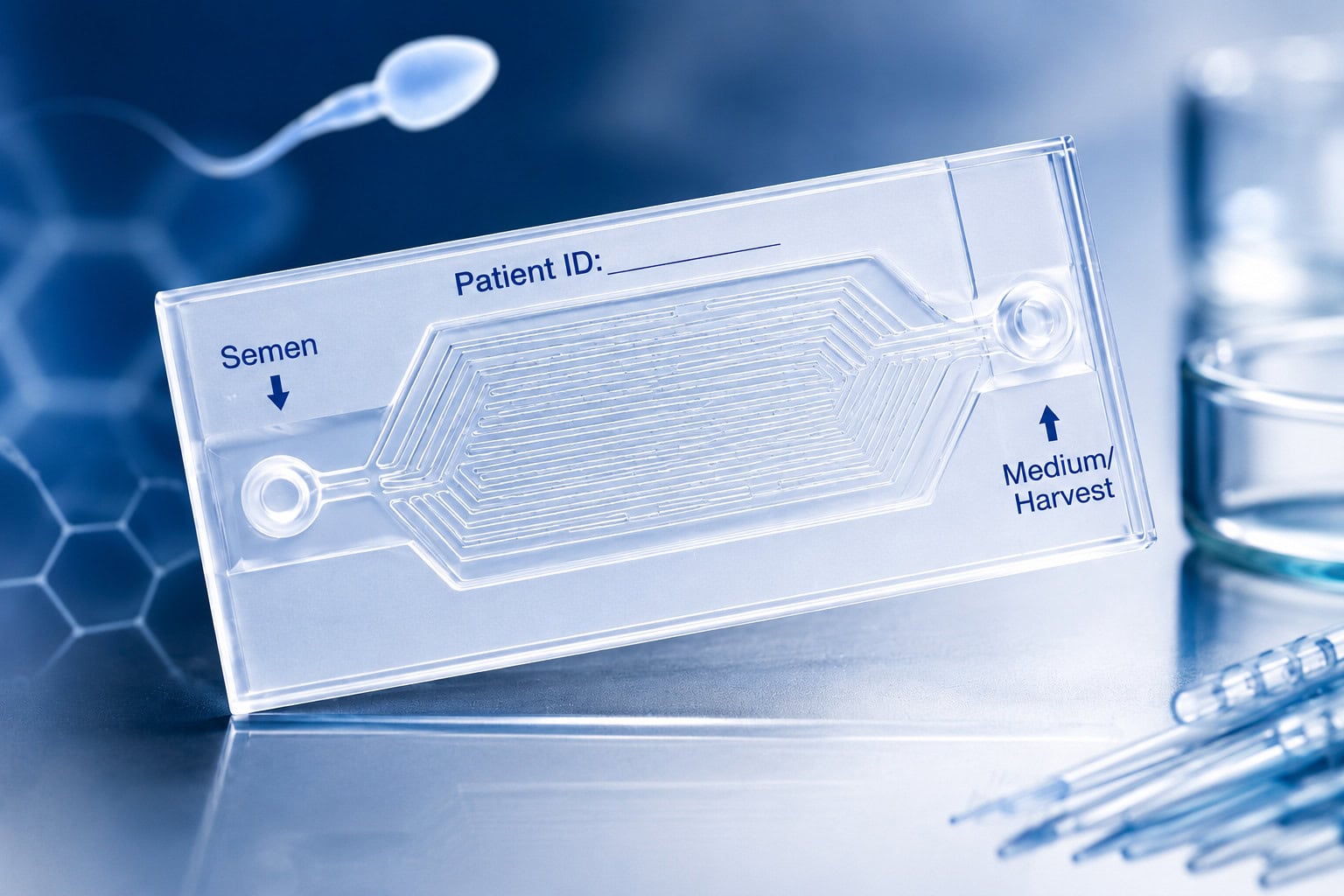
Microfluidics Chip: A Sperm Selection Technology That May Improve the Success of ICSI Treatment
In the treatment of infertility, whether through intrauterine insemination (IUI) or intracytoplasmic sperm injection (ICSI), many couples tend to focus primarily on egg quality. However, sperm quality is equally important and plays a significant role in the overall success of fertility treatment. Many people assume that if a semen analysis shows normal sperm count, motility, and morphology, it is sufficient for achieving pregnancy. In reality, however, there are aspects of sperm quality that cannot be detected by routine semen analysis, such as the integrity of the sperm’s genetic material (DNA). DNA integrity is an important factor that influences fertilization, embryo development, implantation, and ultimately the chance of achieving a successful pregnancy. For this reason, Microfluidics Sperm Sorting (MSS) has been introduced as an advanced sperm preparation technique prior to fertility treatment. Using a Microfluidics Chip, this technology mimics the natural sperm selection process that occurs within the female reproductive tract. The principle behind this technology is straightforward. Sperm must swim through microscopic channels within the chip. Only sperm with strong motility, good vitality, and normal morphology are able to pass through these channels, while poorly motile, abnormally shaped, or non-viable sperm are unable to do so. As a result, the selected sperm population demonstrates superior overall quality in terms of motility and structural integrity. In addition, this technique has been shown to enrich sperm with lower levels of DNA Fragmentation , which may contribute to improved embryo quality and potentially increase the likelihood of successful fertility treatment with IUI or ICSI in selected patients.
What Is a Microfluidics Chip?
A Microfluidics Chip is a device designed with microscopic channels (microchannels) to enable sperm selection using the Microfluidics Sperm Sorting (MSS) technique. Instead of relying on centrifugation, a conventional sperm preparation method, this technology utilizes the sperm’s natural swimming ability to migrate through the microchannels within the chip. One of the key advantages of this technology is its ability to select healthy, highly motile sperm without exposing them to the mechanical stress associated with repeated centrifugation. Studies have shown that multiple rounds of centrifugation may increase the production of reactive oxygen species (ROS), which can damage the sperm cell membrane and increase DNA damage. Microfluidics Chip technology was developed to minimize these adverse effects, helping preserve sperm quality during sample preparation while improving the selection of sperm with greater structural and genetic integrity before fertility treatment.
The Microfluidics Chip functions by mimicking the natural sperm selection process that occurs within the female reproductive tract. Sperm must swim through microscopic channels inside the chip, allowing only those with high motility and normal morphology to successfully pass through. Poorly motile, morphologically abnormal, or non-viable sperm are unable to navigate these channels and are therefore excluded. This selection process enriches the sample with higher-quality sperm while reducing the proportion of sperm with DNA fragmentation. Since DNA integrity plays a crucial role in fertilization, embryo development, and pregnancy outcomes, selecting sperm with better genetic quality may help support the success of fertility treatment. Sperms selected using a Microfluidics Chip are suitable for use in assisted reproductive technologies, including intrauterine insemination (IUI) and intracytoplasmic sperm injection (ICSI).
How Is a Microfluidics Chip Different from Conventional Sperm Selection?
Conventional sperm preparation methods typically rely on centrifugation to separate sperm from seminal fluid and other cellular components before they are used for fertility treatment. Although this technique is widely used and effective, repeated centrifugation may increase the production of reactive oxygen species (ROS), which can damage the sperm cell membrane and compromise DNA integrity. Microfluidics Chip technology was developed to overcome these limitations. Instead of using centrifugation, it selects sperm based on their natural swimming ability through microscopic channels within the chip. This process more closely mimics the physiological environment of the female reproductive tract and the body’s natural sperm selection mechanism. As a result, the sperm preparation process may reduce cellular stress, better preserve sperm DNA integrity, and enrich the sample with higher-quality sperm. These advantages may help support improved outcomes in assisted reproductive treatments.
Benefits of Microfluidics Chip Technology
Microfluidics Chip technology enhances sperm selection by improving the quality of sperm prepared for assisted reproductive treatment. Its potential benefits include:
- Selects sperm with lower DNA fragmentation
Enriches the sample with sperm that have better DNA integrity, an important factor for fertilization, embryo development, and successful fertility treatment outcomes. - Reduces contamination from inflammatory cells and cellular debris
By selecting sperm based on their natural motility, the technology helps reduce the presence of leukocytes and cellular debris, both of which may contribute to oxidative stress. - May reduce oxidative stress
Because the technique minimizes or avoids repeated centrifugation, it may reduce the generation of reactive oxygen species (ROS) that can negatively affect sperm quality. - Increases the proportion of highly motile, morphologically normal sperm
The selected sperm population contains a higher proportion of sperm with high motility and normal morphology, making them more suitable for assisted reproductive procedures such as IUI and ICSI.
Who May Benefit from Microfluidics Chip Technology?
Microfluidics Chip technology may be a suitable option for individuals or couples with factors that could affect sperm quality, including:
- Men with a high DNA Fragmentation Index (DFI)
Individuals with elevated levels of sperm DNA fragmentation, which may negatively affect fertilization, embryo development, and overall fertility treatment outcomes. - Couples with previous unsuccessful fertility treatments
Such as those who have undergone IUI or ICSI with poor fertilization rates, suboptimal embryo development, or embryo developmental arrest during laboratory culture. - Couples with a history of recurrent pregnancy loss
Particularly in cases where no female-related cause has been identified, as sperm DNA integrity may be a contributing factor. - Men at increased risk of oxidative stress
Including those of advanced paternal age, smokers, or individuals with lifestyle or environmental factors that may increase the production of reactive oxygen species (ROS) within the reproductive system. - Couples seeking enhanced sperm selection before IUI or ICSI
Even when semen analysis results are within the normal range, couples who wish to optimize sperm selection before assisted reproductive treatment may consult their fertility specialist to determine whether Microfluidics Chip technology is appropriate for their individual circumstances.
How Can Microfluidics Chip Technology Support the Success of ICSI?
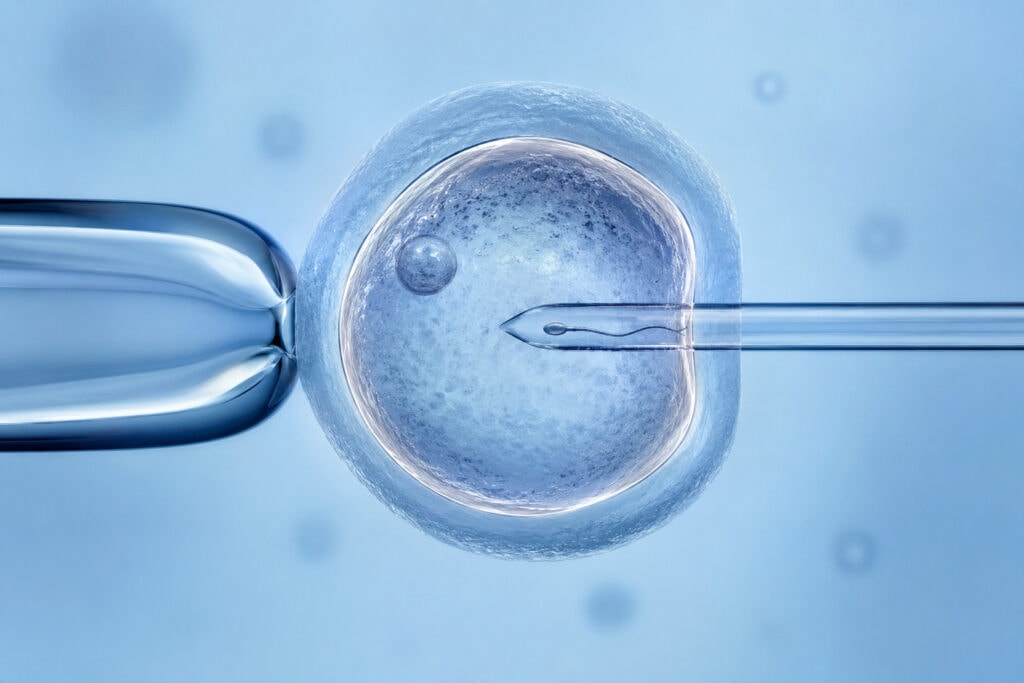
Microfluidics Chip technology is an advanced sperm selection method designed to improve the quality of sperm before assisted reproductive treatment. By mimicking the body’s natural sperm selection process, it enriches the sample with sperm that exhibit better motility and greater DNA integrity, making them more suitable for use in both intrauterine insemination (IUI) and intracytoplasmic sperm injection (ICSI) . During an ICSI procedure, an embryologist selects a single sperm to be injected directly into a mature egg. Therefore, having a pool of high-quality sperm from the outset provides a greater opportunity to select a sperm with optimal characteristics for fertilization. Microfluidics Chip technology supports this process by enriching the sample with sperm that have superior motility and better genetic integrity before the procedure begins. In addition to its application in ICSI, this technology can also be used during sperm preparation for IUI, helping improve the overall quality of the sperm sample used for treatment.
Selecting high-quality sperm is an important step in infertility treatment. In addition to sperm count and motility, DNA integrity plays a crucial role in fertilization, embryo development, and overall treatment outcomes. For couples with poor sperm quality, a high DNA Fragmentation Index (DFI), or a history of unsuccessful fertility treatments, Microfluidics Chip technology may provide an additional option to improve sperm selection before assisted reproductive procedures such as intrauterine insemination (IUI) or intracytoplasmic sperm injection (ICSI).
At VFC (V-Fertility Center), we provide personalized fertility consultations and treatment planning tailored to each couple’s unique needs. Our team of reproductive medicine specialists combines extensive clinical expertise with advanced reproductive technologies to recommend the most appropriate treatment approach and help maximize your chances of achieving a successful pregnancy.
Article by
Dr. Sorramon Songveeratham
Obstetrics and Gynaecology-Reproductive Medicine
Contact or Book a Consultation:
VFC Center – V-Fertility Center
Hotline: 082-903-2035
LINE Official: @vfccenter
FAQs about Microfluidics chip
Who is a good candidate for Microfluidics Chip technology?
Microfluidics Chip technology may be beneficial for men with poor sperm quality, a high DNA Fragmentation Index (DFI), or couples who have experienced previous unsuccessful fertility treatments. It may also be recommended when a fertility specialist believes that enhanced sperm selection could help optimize treatment outcomes. Suitability should always be assessed on an individual basis by a reproductive medicine specialist.
Is Microfluidics Chip technology used only for ICSI?
Microfluidics Chip technology is used during the sperm preparation and selection process before assisted reproductive treatment. It can be used with both IUI and ICSI, depending on the patient's condition and the treating physician's clinical judgment.
Can a Microfluidics Chip treat poor sperm quality?
A Microfluidics Chip does not treat or reverse sperm abnormalities. Instead, it helps select the highest-quality sperm from a semen sample, improving the quality of sperm available for use in IUI or ICSI procedures.
Is a Microfluidics Chip necessary for every IVF or ICSI cycle?
No. The use of a Microfluidics Chip is not necessary for every treatment cycle. Its use depends on the patient's diagnostic findings, the underlying cause of infertility, and the physician's clinical assessment. In certain cases such as men with a high DNA Fragmentation Index (DFI) or couples with previous unsuccessful fertility treatments a fertility specialist may recommend this technology to enhance sperm selection and optimize treatment outcomes. The decision should always be individualized for each patient.

สูตินรีแพทย์เฉพาะทางด้านเวชศาสตร์การเจริญพันธุ์
OBSTETRICS AND GYNAECOLOGY-REPRODUCTIVE MEDICINE
No Comments
Sorry, the comment form is closed at this time.